
"coffee growing climate"
10000 article(s) found

The growing environment of Colombian coffee beans
The suitable climate in Colombia provides a real natural pasture for coffee. Coffee trees in Colombia are mainly cultivated in the Andes, on steep slopes about 1300 meters above sea level, where the annual temperature is about 18 degrees Celsius, annual rainfall is 2000 to 3000 millimeters, latitude 1-11 15 north, longitude 72-78 west, and the specific range of elevation can exceed 2.000 meters. By

Taste full-bodied Dominican fine coffee beans Growing conditions Location Climate Altitude Profile
The Dominican Republic has also experienced a history of turmoil and poverty. Now that the country has implemented democratic elections and entered a period of stable development, it has not yet established formal diplomatic relations with China, but maintains so-called diplomatic relations with Taiwan. It seems that these things have nothing to do with coffee, but in fact they still have an impact. The exchanges between the two countries without diplomatic relations are subject to many restrictions in all aspects. Of course, they will also

A brief introduction to the planting situation of coffee growing areas in Vietnam with superior geographical location, climate and altitude
Two years ago, I read a survey report that Vietnam has overtaken Colombia in coffee bean production, ranking second in the world after Brazil. But it is planted with Robusta trees, and there is still a big gap in the quality of coffee beans compared with countries such as Colombia and Brazil. Vietnam's coffee production is growing. Among Vietnam's new export products, tea ranks first and coffee ranks first.

Climatic conditions of Cuban Crystal Mountain, Cuban Crystal Mountain Coffee taste
Following caf é (Wechat official account vdailycom) found that Beautiful Cafe opened a small shop of its own in Cuba. With fertile land, humid climate and abundant Rain Water, it can be called a natural treasure land for coffee cultivation. The suitable natural conditions provide a favorable natural environment for the growth of coffee trees. Coffee is well planted and developed here. The best coffee growing area in Cuba is located in the Central Mountain.

With the global warming, the production of boutique coffee may be reduced.
Half of the arable land needed to produce coffee will disappear by 2050. This is the result of a new research model that assesses how climate change will change the conditions under which coffee beans grow, such as temperature and rainfall. The researchers first acquired Arabica Coffee (coffeaarabica) and Robusta Coffee (coffea), the two main coffee species currently used in the world.

Coffee growing Environment in Colombia Coffee Water Distribution Network cleaning
The suitable climate in Colombia provides a real natural pasture for coffee. Coffee trees in Colombia are mainly cultivated in the Andes, on steep slopes about 1300 meters above sea level, where the annual temperature is about 18 degrees Celsius, annual rainfall is 2000 to 3000 millimeters, latitude 1-11 15 north, longitude 72-78 west, and the specific range of elevation can exceed 2.000 meters. By

A brief introduction to the planting situation of Mazu boutique coffee beans with full fruit, geographical location, climate and altitude
Alishan coffee is the most special and superior coffee in Taiwan, and its output is relatively small, and it is precious because it is rare. Alishan, located 75 kilometers east of Chiayi City, Taiwan, is located above 2000 meters above sea level, adjacent to the Yushan Mountains and Yushan National Park in the east, surrounded by high mountains, with a cool climate, with an average temperature of 10.6 degrees Celsius in summer and 14.3 degrees Celsius in summer. the average temperature in winter is 6.4 degrees Celsius. Drink

Flavor characteristics, producing areas and brewing parameters of single bean of Rwandan coffee
For the exchange of professional baristas, please pay attention to the coffee workshop (Wechat official account cafe_style) Rwanda coffee single bean flavor characteristics, producing areas and brewing parameters Rwanda is known as the country of Qianqiu, the whole territory is mountainous and plateau, most areas have tropical plateau climate and savanna climate, mild and cool. There are about 33000 hectares of coffee plantations and 500000 people are engaged in the coffee industry. Have a high level

Arabica coffee is on the verge of extinction, fit and cherish!
It's hard to imagine what it would be like without this rich, bitter black liquid in a world that consumes 1.5 billion cups of coffee a day. But it is not impossible for such a world without coffee to become a reality. Scientists tell us that half of the arable land needed to produce coffee will disappear by 2050. Arabica, the most consumed coffee variety in the world, will be extinct in the wild by 2080.

Tropical climate features Rwandan coffee flavor, characteristics, taste and manor
Since the 1920s, Arabica coffee grown in Rwanda has been famous for its unique fruit sweetness and rich grass aroma. In recent years, the Rwandan government has taken positive measures to vigorously promote coffee production, set up coffee production cooperatives in various places, and give technical guidance and financial support to farmers, so that coffee production has made considerable progress. University of Rwanda

Rwanda coffee taste "grass aroma" with tropical climate characteristics of boutique coffee
High-quality coffee comes from washed Arabica beans, which has a unique and perfect flavor. Rwanda coffee is absolutely high quality in the form of washed Arabica beans. As far as Africa is concerned, its coffee industry attracts attention because the country thrives mainly by producing the best possible coffee beans. The taste of Rwandan coffee is described as "grass aroma", with

A brief introduction to the cultivation of exquisite coffee beans in the noble Crystal Mountain of Cuba, geographical location, climate and altitude
Crystal Mountain Coffee beans are typical island beans with a clean and delicate taste, slightly sour taste, not strong but long-lasting, with sweet fruit aromas. The coffee made by it was owned by Jane in 1748, and coffee was introduced to Cuba from Domiga, and Cuba has been growing coffee ever since. With fertile land, humid climate and abundant Rain Water, Cuba can be called a natural treasure land for coffee cultivation. Suitable self

A brief introduction to the Origin, Development, History and Culture of Columbia's exquisite Coffee beans
The suitable climate in Colombia provides a real natural pasture for coffee. Coffee trees in Colombia are mainly cultivated in the Andes, on steep slopes about 1300 meters above sea level, where the annual temperature is about 18 degrees Celsius, annual rainfall is 2000 to 3000 millimeters, latitude 1-11 15 north, longitude 72-78 west, and the specific range of elevation can exceed 2.000 meters. By

The producing area of single bean in Rwanda introduces how to brew single bean in Rwanda.
Professional barista exchanges please follow the coffee workshop (Wechat official account cafe_style) Rwanda is known as the country of a thousand hills, the whole territory is mountainous and plateau, most of the area has a tropical plateau climate and savanna climate, mild and cool. There are about 33000 hectares of coffee plantations and 500000 people are engaged in the coffee industry. Have good natural conditions of high altitude and fertile volcanic soil, as is the case in this country.

Brazilian coffee culture background Brazilian coffee beans growing environment processing process hand-made Brazilian coffee
Professional coffee knowledge exchange more coffee bean information please follow the coffee workshop (Wechat official account cafe_style) Brazilian coffee culture one, cultural characteristics coffee gives people the feeling is elegant and noble drink, its rich aroma is fascinating. Coffee used to be a luxury drink, but now it has become a popular drink for leisure or afternoon tea, and even coffee is made.

Growing environment in the Andes, a coffee-growing region in Colombia
The suitable climate in Colombia provides a real natural pasture for coffee. Coffee trees in Colombia are mainly cultivated in the Andes, on steep slopes about 1300 meters above sea level, where the annual temperature is about 18 degrees Celsius, annual rainfall is 2000 to 3000 millimeters, latitude 1-11 15 north, longitude 72-78 west, and the specific range of elevation can exceed 2.000 meters. By

Guatemala Antigua Marguerite Coffee Flavor Why is Guatemala suitable for growing Coffee
Professional coffee knowledge exchange more coffee bean information please pay attention to the coffee workshop (Wechat official account cafe_style) Central America has a unique geographical environment, north and north America, south and south America border. Facing the Caribbean Sea and the Gulf of Mexico, the climate is relatively hot and humid, and it has always been an important coffee producing area in the world. Coffee has been driving Guatemala for more than a hundred years.
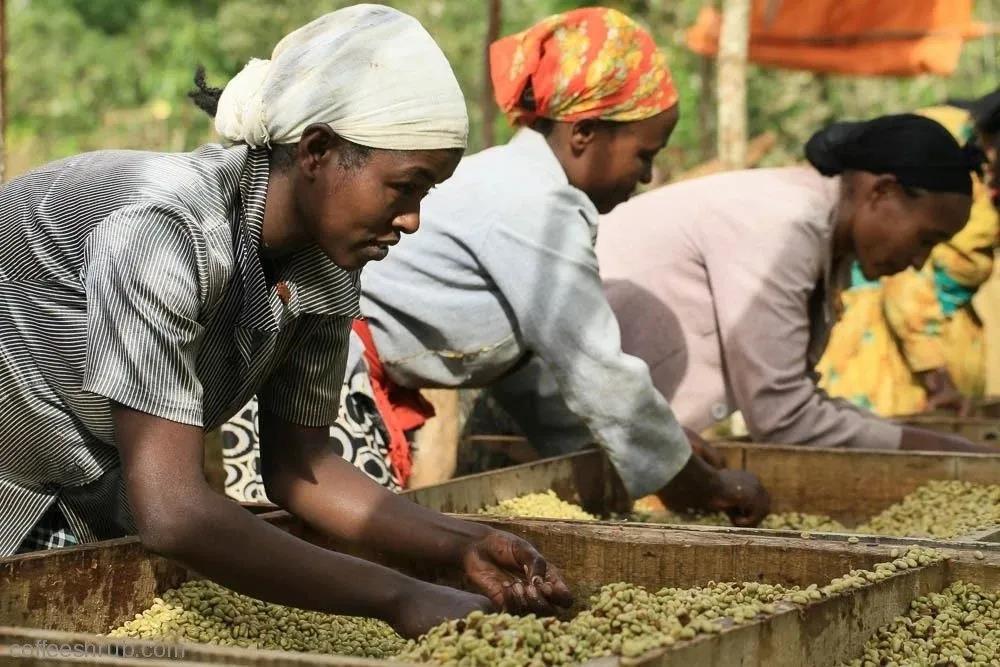
Climate change affects the yield and quality of Ethiopia's Yega Xuefei boutique coffee beans
Professional coffee knowledge exchange more coffee bean information follow coffee workshop (Wechat official account cafe_style) A new study conducted by an international research group shows that climate change is affecting Ethiopia, Africa's largest coffee producer! In the future, the production of Ethiopia's boutique coffee beans will continue to decline, and the flavor will become more and more insipid. Carry out the research

A brief introduction to the Market Price of soft and fragrant Rwandan Coffee
Bourbon coffee grown in Rwanda is amazing for its sweet fruit, full-bodied, unrestrained and lingering aftertaste. This coffee has a delicious, citrus sweetness and a deep chocolate color. Rwanda bourbon is known as the Bourbon that captures the whole African charm and condenses it in a cup.

Long aftertaste Colombia Na Linglong fine coffee bean varieties planting market price profile
Colombia's favourable climate provides a truly natural pasture for coffee. Coffee trees in Colombia are mainly cultivated in the Andes mountains, on steep slopes up to 1,300 meters above sea level, where the annual temperature is about 18 degrees Celsius, the annual rainfall is 2000 to 3000 mm, the latitude is 1 - 11 15, the longitude is 72 - 78, and the specific altitude range can exceed 2.000 meters. by